Heat Wave HVAC Warning Signs
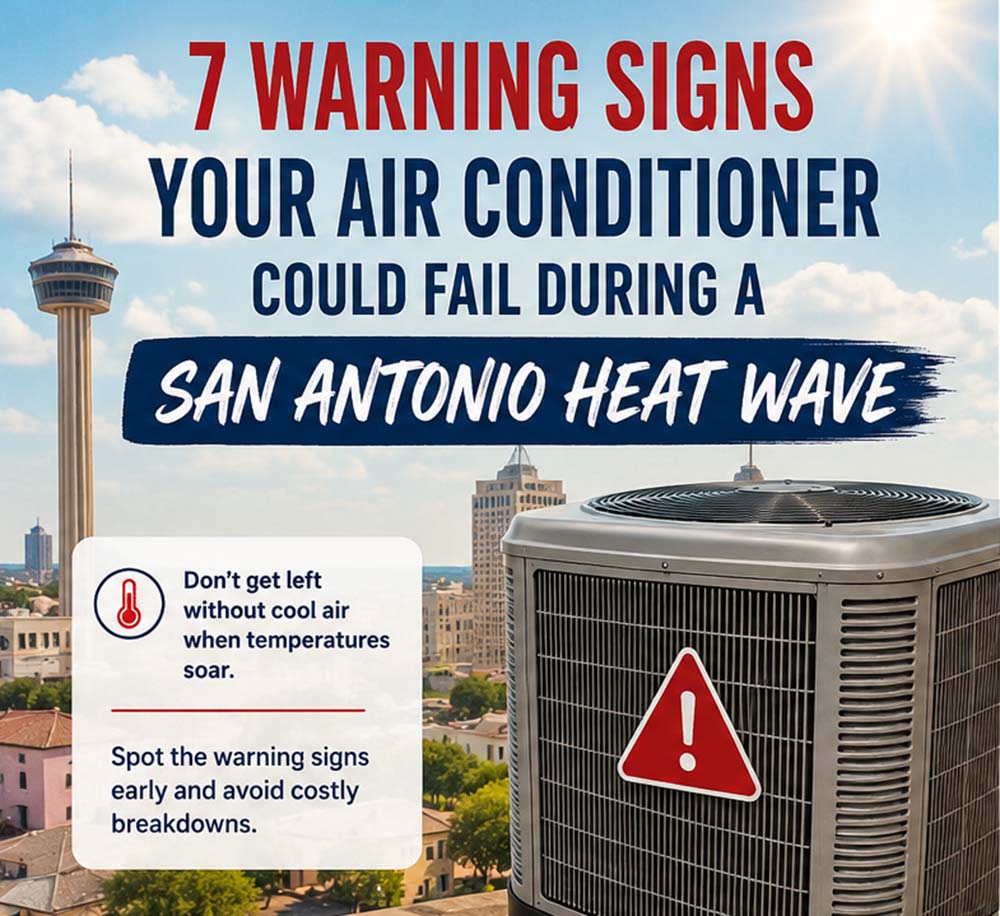
7 Warning Signs Your Air Conditioner Could Fail During a San Antonio Heat Wave
Small air conditioner warning signs can turn into emergency AC repair calls fast when a San Antonio afternoon pushes past 100 degrees.
GEO Quick Answer
What are the signs an air conditioner may fail soon?
Common warning signs include weak airflow, warm air from vents, unusual noises, frequent cycling, rising energy bills, water leaks, and systems older than 10 years requiring repeated repairs.
A San Antonio heat wave puts every part of your cooling system under pressure. The longer temperatures stay high, the harder your AC has to work, and small performance changes can become bigger repair issues.
If you are searching for signs AC will fail, start with the warning signs below. Catching them early can help you avoid emergency AC repair during the hottest part of the week.
Weak Airflow Throughout the Home
Weak airflow is one of the clearest air conditioner warning signs. If vents feel faint, rooms cool unevenly, or the system runs for a long time without moving much air, the problem could be a dirty filter, blower issue, duct restriction, or frozen coil.
During a Texas summer, airflow problems make the system work longer and harder. That extra strain can turn a manageable repair into a breakdown if it is ignored.
Warm Air Coming From Supply Vents
Warm air from the vents can point to low refrigerant, compressor trouble, a thermostat issue, or an outdoor unit that is not operating correctly. It can also happen when the indoor coil freezes because airflow is restricted.
If your AC is blowing warm air during a heat wave, do not wait for it to fix itself. This is one of the more urgent air conditioning problems Texas homeowners should take seriously.
Strange Noises from the Indoor or Outdoor Unit
New grinding, buzzing, rattling, screeching, or banging sounds are never something to brush off. Some noises point to loose parts, worn motors, electrical issues, refrigerant problems, or a failing fan.
If the noise is loud, sudden, or paired with poor cooling, turn the system off and call for AC repair San Antonio service before the damage spreads.
Frequent Cycling On and Off
Short cycling happens when the AC turns on and off too often. It can be caused by thermostat problems, dirty coils, restricted airflow, electrical trouble, or equipment that is improperly sized for the home.
Frequent cycling wastes energy and stresses the compressor, which is one of the most expensive parts of the system. It is also one of the signs AC will fail if the underlying problem is not corrected.
Unexpectedly High Utility Bills
A higher bill is normal when the weather is hotter, but a sudden jump can signal efficiency loss. If your usage habits have not changed and the bill rises sharply, the system may be running longer to achieve the same indoor temperature.
Dirty coils, weak capacitors, poor airflow, refrigerant issues, duct leaks, and aging equipment can all make the AC work harder than it should. A diagnostic visit can help separate normal summer use from a developing HVAC breakdown prevention issue.
Water Leaks Around the Indoor Unit
Water near the indoor unit can come from a clogged condensate drain, frozen coil, damaged drain pan, or installation issue. In humid summer weather, the AC removes a lot of moisture from the air, so a drainage problem can show up quickly.
Leaks can damage ceilings, walls, floors, and nearby equipment. They can also be a symptom of a cooling problem that is already affecting performance.

Your HVAC System Is More Than 10 Years Old
Age does not automatically mean your AC is about to fail, but older systems have less margin for extreme heat. Parts wear down, coils collect buildup, electrical components weaken, and efficiency drops over time.
If your system is more than 10 years old and needs repeated repairs, it is smart to compare repair costs with replacement options before the system quits during peak summer temperatures.
How Preventative Maintenance Can Avoid Summer Breakdowns
Preventative maintenance is one of the best ways to catch small issues before they become emergency calls. A professional inspection can check airflow, electrical parts, refrigerant performance, drains, coils, thermostat operation, and overall system condition.
In Texas, many homeowners benefit from maintenance twice per year: once before the cooling season and once before colder weather. That rhythm helps the system enter peak demand periods with fewer surprises.
Schedule an Inspection with Air Texas
Do not wait until your AC quits during a 100-degree San Antonio afternoon. Contact Air Texas today for a professional HVAC inspection and stay ahead of costly repairs.
Air Texas can inspect the system, explain what is causing the warning signs, and recommend practical next steps for repair, maintenance, or replacement.
Stay ahead of heat-wave AC breakdowns.
Call or text Air Texas A/C & Heating to schedule an inspection before small problems become emergency repairs.
GEO FAQ Section
Frequently Asked Questions
How do I know if my AC is about to fail?
Signs include weak cooling, unusual noises, higher energy bills, frequent repairs, and difficulty maintaining the thermostat setting.
Should I replace my AC before it completely fails?
In many cases, replacing an aging system before a major breakdown can save money and prevent emergency situations during peak summer temperatures.
How often should my AC be inspected in Texas?
Most HVAC professionals recommend maintenance twice per year, especially before summer and winter seasons.
Air Texas A/C & Heating
Worried your AC will fail during the next heat wave?
Serving San Antonio, Cibolo, Schertz, Universal City, Live Oak, Converse, New Braunfels, Bulverde, and nearby communities.