
We’ve all been there: the seasons are changing, and you’re wondering if that HVAC maintenance reminder is just another “extra” or a genuine necessity. At Air Texas, we hear this question a lot.
The short answer? Yes. But let’s talk about why—and what’s actually at stake for your home and your family.
1. Reliability When You Need It Most
Think of your HVAC system like a car. You wouldn’t drive 50,000 miles without an oil change and expect it to handle a cross-country road trip in 100-degree heat.
In Texas, our systems work overtime. Many homeowners are okay with waiting until the last minute to turn on the heat or air, but that is exactly when systems are most likely to fail. A tune-up allows us to catch small issues—like a worn belt or a failing capacitor—before they leave you broken down and waiting for an emergency repair during a peak season.
2. The Safety Factor: The “Silent Killer”
If you have a gas heater, maintenance isn’t just about comfort; it’s a safety requirement. Over time, gas heaters can develop cracks in the heat exchanger or issues with the flue. This can lead to carbon monoxide leaks—a colorless, odorless gas that is a serious health hazard.
During a Professional Furnace Inspection, our technicians at Air Texas specifically check for these risks to ensure your home remains a safe environment for your family.
3. The “10-Year” Rule
Is your system more than 10 years old? If so, regular maintenance becomes even more critical. As systems age, parts naturally wear out and efficiency drops. According to the Department of Energy, neglecting maintenance leads to a steady decline in performance and a steady increase in your monthly energy bills.
For older units, a tune-up is the difference between getting another five years of life out of your investment or facing a premature (and expensive) replacement.
4. What Happens During a Tune-Up?
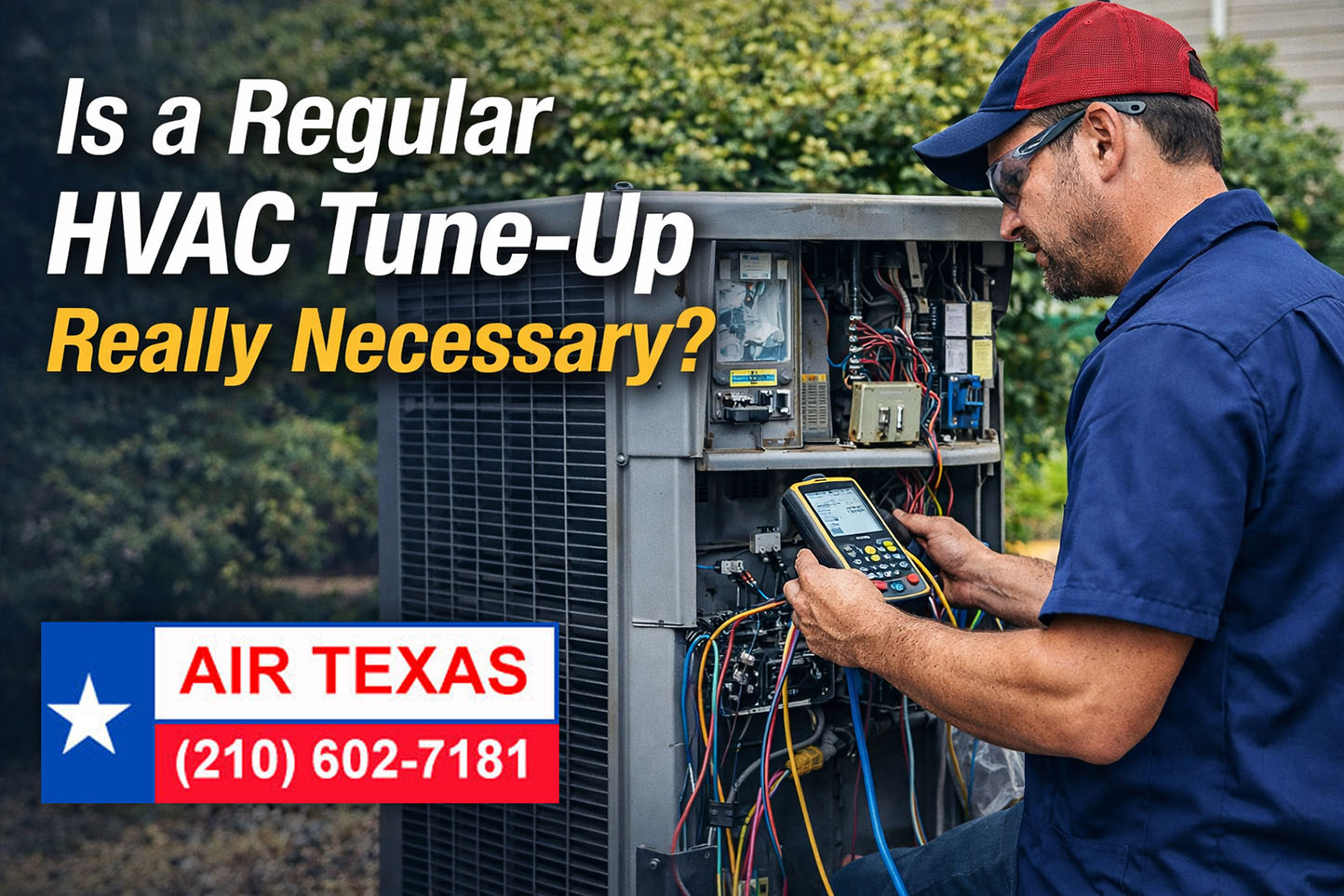
When you schedule with Air Texas, we don’t just “look” at the unit. We perform a comprehensive check, including:
- Cleaning coils and filters to improve airflow and efficiency.
- Checking refrigerant levels to ensure your system isn’t overworking.
- Inspecting electrical connections to prevent fire hazards.
- Testing safety controls on gas systems to prevent carbon monoxide leaks.
The Bottom Line
You can wait until the temperature changes and hope for the best, but prevention is always cheaper and less stressful than a breakdown.
Ready to get ahead of the weather?
Contact us at Air Texas today to schedule your seasonal tune-up. Let’s make sure your system is reliable, efficient, and—most importantly—safe.

Frequently Asked Questions
How often should you schedule an HVAC tune-up?
Most homes benefit from two tune-ups per year—one in spring (cooling) and one in fall (heating).
Can HVAC maintenance lower energy bills?
Yes. Clean coils, correct refrigerant levels, and good airflow can reduce strain and help the system run more efficiently.
What’s the biggest risk of skipping furnace maintenance?
For gas systems, skipped maintenance can increase carbon monoxide risk if the heat exchanger or venting develops problems.
Is a tune-up worth it for an older HVAC system?
Absolutely. Systems 10+ years old often gain the most from preventive care because wear-and-tear issues are more common.