
Repair with Confidence or Upgrade with Certainty, You Decide
You don’t have to guess whether repair or replacement is the right move. With a professional evaluation, you get clear recommendations based on performance, cost, and long-term value. Whether you need a precise repair or a full system upgrade, you get a solution tailored to your needs. Contact us today and take the next step toward reliable, efficient heating.
Heating System Installation or Replacement vs. Repair
At two o’clock on a freezing January morning, James Miller stood in his dark living room wearing a winter coat, watching his breath fog the air as his heating system fell silent. What turned a cold night into a financial nightmare wasn’t just a broken furnace, it was a lack of knowledge about when to repair, replace, or install a new heating system. Like many homeowners, James ignored the warning signs and didn’t understand the true cost of repeated repairs on an aging unit. That ignorance led him to spend thousands of dollars on temporary fixes, only to replace the system anyway weeks later.
James’s story is far from unique. Every winter, homeowners across the U.S. face similar emergencies because they don’t fully understand how heating systems work, how to evaluate repair costs, or when replacement is the smarter long-term decision. Knowing the difference can mean the difference between a smart investment and years of unnecessary expenses, not to mention avoiding dangerous breakdowns during extreme cold.
To make informed decisions, protect your home, and prevent costly mistakes like James’s from happening again, it’s essential to understand this topic in depth. Read the article to the end to learn how to choose wisely between heating system repair, replacement, or installation, and how to safeguard both your comfort and your finances.
When to Repair vs. Replace Your Heating System
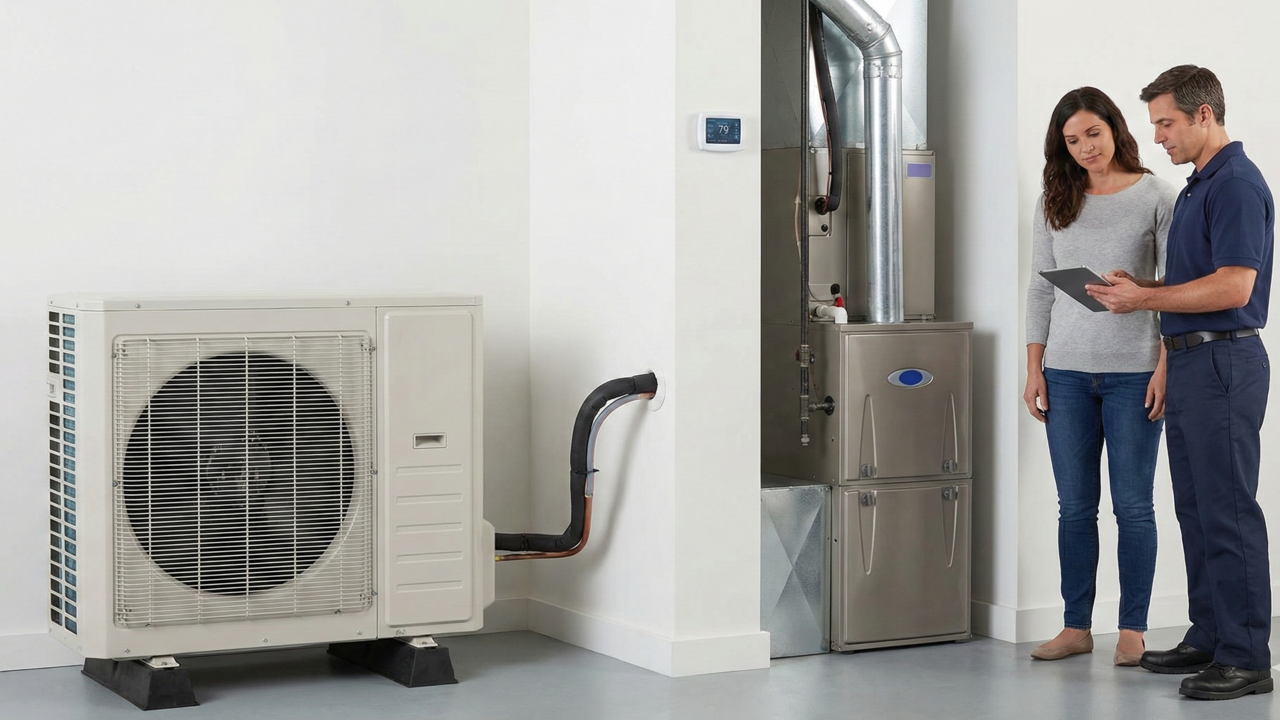
In the United States the winter can be overwhelming. The only thing that can protect your family from a terrible and potentially dangerous situation is the reliability of your heating system, whether it’s a blizzard in Minnesota or a damp cold in Seattle. However, most homeowners neglect their heating systems until they fail. The pressure to make a snap decision when standing in a chilly living room at two in the morning might result in financial errors that follow you for years. It’s important to understand the subtle differences between heating system installation, repair, and replacement in order to safeguard both your home’s comfort and your finances account from unnecessary strain.
Let’s examine the story of James to highlight the context of the theme. For the past two winters, James’s old electric furnace had been humming softly. He assumed the sound was normal for an older unit and overlooked the consistent spike in his monthly electricity usage. The humming ceased one especially cold January night, and the scent of burning plastic and a menacing calm took its place. James contacted an emergency technician out of panic and coldness, and the guy paid a premium to come. A blown blower motor and a fried sequencer were the diagnoses. James approved a $1,200 repair on an 18-year-old unit out of desperation. The heating elements failed three weeks later, necessitating another costly service appointment. James would have seen that investing money in a failing system was a losing strategy if he had done an objective analysis of the issue sooner. He ended up paying for repairs that were almost half the price of a new machine instead of the anticipated upgrade, and he eventually had to replace it nevertheless.
The Repair Equation: When to Fix It
When a system breaks, the initial thought is nearly always to fix it. It appears to be the more cost-effective and timely solution, and in many circumstances, it is. Repair is the sensible choice if your system is less than 10 years old and the issue is a small part, like a broken thermostat, a worn capacitor, or a tripped breaker. Compared to their gas counterparts, electric heating systems especially electric furnaces have fewer moving parts, which makes small repairs simpler.
But you have to apply the “50% Rule” to every repair quote. This industry standard states that you should halt and consider replacing the system whenever the repair expenses equal half of its value (or the cost of a new one). For instance, it could be reasonable to replace a heating element for between $200 and $600 (source: HomeAdvisor, 2025). However, you might have to pay more than $2,000 for repairs if the compressor in your heat pump breaks. You’re investing in a sinking ship at this point. You should also record how frequently maintenance is performed. Your system is running out if you’ve needed to contact a professional more than twice in the past two years.
The Electric Evolution: Heat Pumps and Furnaces
Due to legislative incentives and efficiency rules, the debate over heating system installation, repair, and replacement has drastically changed in 2025 in favor of electrification. The electric furnace and the heat pump are the two primary electric technologies that US homeowners typically have to choose between.
The workhorse of basic heating is the electric furnace. Like a big toaster, it generates heat using resistance coils. Although it is 100% effective in producing heat from energy, it can be costly to run in places with high electricity rates. It is inexpensive to set up but expensive to operate. The heat pump, on the other hand, is a modern technology. Instead of creating heat, it transfers heat from the outside air into your home, even in freezing temperatures. Modern cold climate heat pumps can run efficiently even at very low temperatures.
Think about Maria in Vermont. There were frigid areas in every room since her house relied on outdated electric baseboard heaters that cost her a fortune every winter. Because of the initial expense, she was hesitant to upgrade. Nevertheless, she chose to install a ductless mini-split heat pump system after looking into the efficiency ratings. There was a huge difference. Her home’s comfort level stabilized, and her monthly power bill decreased by forty percent. Within five years, the system’s energy savings paid for itself. Maria’s experience brings to light an important fact: the long-term cost of operating frequently outweighs the sticker price of installation.
Analyzing the Costs of Replacement and Installation
You have to deal with the realities of replacement expenses when you determine that repair is no longer feasible. Although prices have slightly stabilized in 2025, they are still a substantial investment. Depending on the size of the unit and any required electrical improvements, homeowners in the US usually pay between $2,000 and $7,000 for a regular electric furnace replacement (Source: Angi, 2024). This is the lower end of the range, and people who don’t have enough money find it attractive.
However, the numbers are different when it comes to a heat pump. A complete heat pump installation for a central ducted system, including the air handler, usually costs between $4,500 and over $12,000 (Source: HomeGuide, 2025). This number can be high when compared to a furnace, but remember that a heat pump also provides air conditioning throughout the summer, so you’re really getting two systems for the price of one. Efficiency is also measured using HSPF2 (Heating Seasonal Performance Factor). A unit with a high HSPF2 rating will consume much less electricity than a standard electric furnace, which is crucial considering the volatility of the energy prices.
It’s also important to understand that “installation” involves more than just replacing boxes. A proper installation includes a “Manual J” load estimate to ensure the unit is the right size for your home. A large unit will short-cycle, wearing out parts more quickly and causing humidity issues, whereas an undersized unit will run continuously and never reach the appropriate temperature. The ductwork must also be inspected. Leaky ducts can lose up to 30% of the warm air before it reaches your living rooms, which can reduce the effectiveness of even the most expensive new system (Source: Energy Star, 2025).
Electrical Panels and Insulation
One element that is very surprising when installing, repairing, or replacing a heating system is the electrical infrastructure of the house. A modern, high-efficiency electric heating system may require more power than the 100-amp electrical panels found in older homes, particularly those built before 1980. If your panel needs to be upgraded to 200 amps to handle a new heat pump with backup power strips, you might have to pay an additional $1,500 to $4,000. Ignoring this guideline could lead to tripped breakers and possible fire hazards.
In the same way, insulation is very important. It’s like dumping water into a bucket with holes when you install a brand-new, high-tech heating system in a home with inadequate insulation. Doing a home energy assessment is a good idea before investing thousands in a new unit. Sometimes it’s less expensive to seal windows or add insulation to your attic than to replace the heater. You may be able to install a smaller, less costly heating unit with a narrower home envelope, saving money on both the equipment and the monthly operation.
Conclusion
If you manage the complexities of your home’s heating it is balancing long-term planning and short-term budgetary realities. Regardless of whether you want to engage in a complete system overhaul or address it would be a minor issue, consistent comfort and safety are the ultimate aims. There is a rule: If repairs cost more than 50% of the cost of a new item, replacement is always the more economical choice.
- Accept Technology: Compared to conventional electric furnaces, modern heat pumps are more efficient and provide both heating and cooling while reducing monthly costs.
- Infrastructure: It´s important never ignore the state of your ductwork and electrical panel; a new unit cannot function properly on a deteriorating infrastructure.
- Safety First: Proactive maintenance is essential since ignoring odd noises or smells in order to save money might result in disastrous breakdowns in the depth of winter.
- Consider the Long Term: Although high-efficiency systems are more expensive to install, the decrease in energy use frequently results in a complete return on investment in a few of years.
Frequently Asked Questions
What is the average lifespan of an electric heating system? A heat pump has a life expectancy of 15 to 20 years because it operates year-round for both heating and cooling, whereas an electric furnace typically lasts 20 to 30 years because of its straightforward construction. The most important element in achieving these goals is routine maintenance.
Does a heat pump work well in below-freezing temperatures? Indeed, contemporary “cold climate” heat pumps may function well at temperatures as low as -13°F (-25°C). Modern technology preserves capacity and efficiency even in harsh winter circumstances, in contrast to older models that mainly depended on costly backup resistance heating strips.
Can I install a new electric heating system myself to save money? It is highly discouraged. Heating installation involves high-voltage electrical work, refrigerant handling (for heat pumps), and precise load calculations. Improper installation not only voids warranties but also poses serious fire risks and safety hazards to your home.
Heating system decisions are ultimately about foresight. The choice between repair, replacement, or full installation should never be driven solely by urgency or upfront cost, but by a clear assessment of system age, efficiency, infrastructure, and long-term operating expenses. As energy prices fluctuate and electrification accelerates across the U.S., homeowners who evaluate their options objectively are far better positioned to protect both their comfort and their finances. Proactive planning, modern technology, and attention to a home’s electrical and insulation readiness are no longer optional, they are the foundation of a reliable, cost-effective heating strategy for the years ahead.