
Fix Your Boiler Pressure Before It Becomes a Costly Repair
If your boiler pressure keeps dropping or rising too high, you’re facing a warning sign, not a minor inconvenience. You could attempt to repressurize it yourself, but one wrong move can damage internal components or void warranties. When you bring us in, you get a safe, accurate pressure adjustment and a professional inspection that prevents bigger, more expensive breakdowns.
Act now. Book your boiler pressure service and protect your heating system.
How To Bleed Radiators / Fix Boiler Pressure
Last January, Brayan M., a homeowner in Chicago, thought his heating system was failing him at the worst possible time. After the first heavy frost, his living room radiators were cold at the top, his boiler pressure kept fluctuating, and his energy bill was climbing. Convinced the thermostat was the problem, he spent hours adjusting settings, only to realize the issue had nothing to do with temperature controls. The real cause? He didn’t know how to bleed his radiators or check his boiler pressure.
Like Brayan, thousands of homeowners face uneven heating, strange radiator noises, and sudden pressure drops every winter simply because they lack basic knowledge about how their hydronic heating system works. This ignorance often leads to unnecessary service calls, higher utility costs, and even preventable boiler damage.
Understanding how to properly bleed radiators and adjust boiler pressure isn’t just a technical skill, it’s essential home maintenance that protects your comfort, your safety, and your wallet.
If you want to avoid the same costly mistake Brayan almost made, keep reading to the end of this article and learn exactly how to maintain your heating system the right way.
A Guide To Bleeding Radiators and Adjusting Boiler Pressure
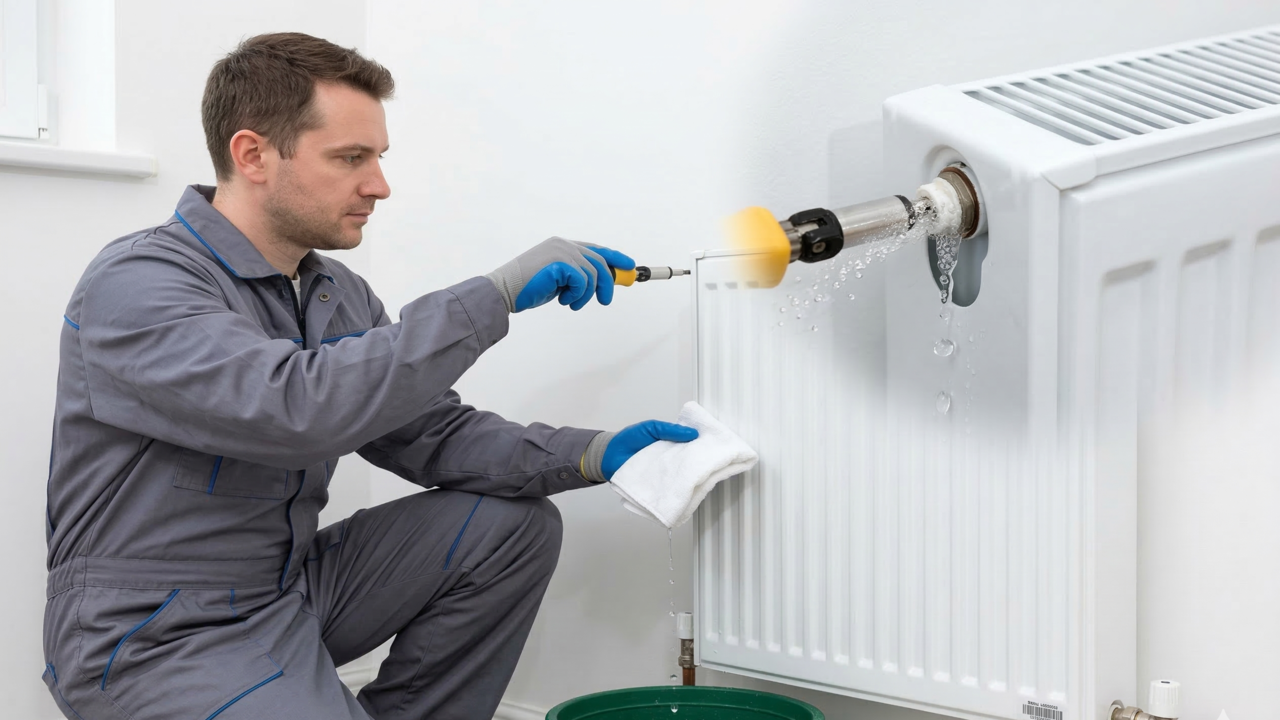
Comprehensive hydronic heating system maintenance has fundamentally changed from a reactive repair task to a highly proactive and incredibly fulfilling personal endeavor that guarantees the steady warmth and safety of millions of homes in the crucial and extremely technical field of contemporary residential climate control. This intricate and dynamic thermal ecosystem provides a wealth of internal elements and operational factors that are often misinterpreted by well-intentioned homeowners who merely want to fix typical heating irregularities in a sincere effort to find a simple solution to a seasonal mechanical problem without realizing the amazing efficiency of their own heating loop.
In order to fully comprehend how natural thermal expansion and fluid dynamics work in perfect harmony to safely distribute heat, it is necessary to systematically compare basic manual adjustments directly against the diagnostic capabilities of modern pressure monitoring in order to determine the best maintenance strategy for a particular property’s entirely unique piping configuration and distinct boiler model. In the end, this meticulous assessment is what guarantees long-term system health and prevents the frequent error of ignoring small cold spots that only signify trapped air instead of addressing the basic requirement for balanced internal pressure and long-term sustainable mechanical advancement, which essentially ensures a comfortable home environment and a lower utility bill. Furthermore this completely integrated approach beautifully aligns with modern home efficiency standards by ensuring that every unit of energy consumed by the boiler is treated as a valuable resource rather than a wasted byproduct of poor circulation allowing homeowners to quietly and effectively improve their immediate living conditions.
Brayan last winter when immediately after the first major frost he noticed that his living room radiators were remaining considerably cold at the top while the rest of his home felt pleasantly warm but slightly less efficient than the previous year. Assuming the everyday plumbing challenge was merely a matter of a faulty thermostat that could be easily adjusted Brayan spent a busy afternoon recalibrating his digital controls only to quickly discover that the underlying mechanical system remained naturally slow to circulate hot water through the upper sections of the metal panels. Caught between a rapidly approaching blizzard and the realization that his heating system needed a more comprehensive maintenance strategy Brayan deeply reflected on his gentle learning curve regarding residential thermodynamics eventually consulting a local heating technician who perfectly explained the simple process of bleeding the air and topping up the boiler pressure to permanently and gracefully solve his concerns without ever needing expensive replacement parts. This thoughtful modification beautifully allowed him to fully enjoy his warm indoor sanctuary knowing that the underlying systems were quietly and efficiently managing the thermal environment exactly as they were designed to do while protecting his budget from unnecessary service calls.
The Process of Bleeding Radiators
A highly effective and meticulously planned radiator bleeding procedure is the first step in the fundamental restoration of a modern hydronic heating loop. This procedure smoothly releases trapped air pockets from the upper sections of the metal panels before they can ever obstruct the required flow of hot water or produce annoying gurgling noises in the quiet rooms. By carefully using a standard radiator key to open the small bleed valve and let the silent air escape until a steady stream of water appears, this straightforward maintenance step is ideal for conscientious homeowners seeking to discreetly restore their system’s thermal efficiency (source: Department of Energy, 2024).
Additionally, this sophisticated venting process is a crucial safety precaution that carefully guarantees every radiator’s surface area is fully utilized for heat exchange, ensuring that the priceless thermal energy is instantly dispersed throughout the space to offer complete peace of mind on the coldest winter nights while also lessening the boiler’s workload. Because a complete system vent guarantees that the circulating water flows easily through every pipe without any unexpected cold spots along the way that might waste energy, relying on a beautifully thorough bleeding routine ultimately requires a highly precise sequential approach to ensure that every radiator in the house is checked from the bottom floor to the top. This incredibly thoughtful approach to mechanical maintenance easily transforms a historically problematic cold room into a highly functional and beautifully warm living space by safely removing the invisible air blocks at their exact source before they can ever become a comfort issue and allowing the heating system to perform smoothly and efficiently behind the scenes.
Checking and Adjusting Boiler Pressure
The next crucial step in system optimization is to precisely monitor and adjust the boiler’s internal water pressure after the trapped air has been successfully released from the radiators. This ensures that the pump has enough mechanical force to push the heated fluid throughout the entire house without taxing the internal components. Modern boilers use a clear digital or analog pressure gauge that usually has a colored green zone to indicate the perfectly balanced operating range, which is typically between one and one and a half bars of atmospheric pressure, whereas many older traditional systems required manual intervention. Expert heating engineers take a considerable amount of time to explain that bleeding radiators will inevitably result in a slight drop in overall system pressure. This simply means that the homeowner should use the special filling loop valves to gradually introduce a small amount of fresh water until the gauge returns to its ideal position (source: Health and Safety Executive (2023)). The longevity of the costly boiler unit is preserved by taking the extra time to properly balance the internal pressure after each venting session. This practically ensures that the entire heating system will remain completely stable and fully operational for many decades without requiring any emergency repairs or experiencing frustrating pressure drops. Homeowners can effortlessly create a wonderfully stable thermal environment that discreetly respects the mechanical limits of the property while successfully performing a crucial heating service perfectly out of sight to gracefully ensure the ongoing comfort and safety of the entire family by carefully combining these straightforward but incredibly effective pressure adjustments.
Identifying System Circulation Issues
The ability to recognize subtle circulation issues basically, how quickly and evenly the hot water can naturally travel through the pipes like a giant internal heartbeat ready to deliver warmth is unquestionably the most prominent and universally important factor when carefully evaluating the natural efficiency and long-term success of any residential heating system. Finding out that cold spots at the bottom of a radiator frequently indicate a buildup of natural sludge rather than trapped air is a very common and entirely natural learning curve for new property owners. This simply means that the system may eventually require a professional power flush to safely restore the original flow over a period of several hours.
By ensuring that the fluid movement precisely matches the boiler’s output capacity, properly diagnosing these natural circulation rhythms before the peak of winter easily prevents the common problem of a sudden system failure during a freeze, allowing the heat to gently replenish the indoor temperature exactly as the designers wonderfully intended (source: Chartered Institute of Plumbing and Heating Engineering, 2024). In the end, the best and most dependable method for any modern homeowner is to conduct a basic preliminary touch test by monitoring the temperature in various radiator sections and carefully timing how long it takes them to reach full heat before the first significant cold snap. This practically ensures that their heating system will operate in perfect mechanical harmony with the needs of the house. A good understanding of this rhythmic mechanical process enables the proactive property owner to precisely forecast how their particular heating loop will react to drastic outdoor temperature fluctuations, producing a wonderfully balanced and incredibly dependable indoor space that confidently handles the winter season while offering a genuinely fulfilling and extremely instructive home maintenance project.
Conclusion
In contrast to the straightforward and frequently ineffective practice of simply turning up the thermostat, the strategic maintenance of a residential heating system through bleeding and pressure adjustment represents a highly rational and environmentally friendly approach to modern property management that prioritizes thermal efficiency and sustainable mechanical health. Homeowners can easily create a balanced indoor environment that calmly handles the coldest winters without ever putting undue strain on their boiler or their budget by taking the time to understand their home’s natural circulation patterns and how appropriate venting techniques smoothly restore heat throughout their property.
- To safely circulate the heat before the boiler suffers a low-pressure lockout that could leave the house without warmth, it is crucial to maintain a smoothly balanced pressure level between one and one and a half bars.
- In addition to preventing air pockets from moving, remembering to correctly bleed the radiators from the ground floor up to the highest point in the home beautifully ensures that the system will continue to operate as intended throughout the season.
- Before contacting a technician, it is crucial to take a time to locate any cold spots that remain after bleeding. This is because knowing whether the problem is sludge or air ensures that any professional assistance is precisely targeted to the system’s genuine demands.
Frequently Asked Questions about How to release trapped air in radiators and correct boiler pressure
How does bleeding a radiator actually restore the heat to a cold room without changing the boiler settings?
Bleeding a radiator works by opening a small valve to release trapped air pockets that naturally collect at the top of the panel and block the hot water from filling the entire unit, which immediately allows the thermal energy to circulate through the whole surface area once the air is gone.
What is the specific purpose of the filling loop valves found underneath the boiler unit?
The filling loop valves are used to manually introduce a small, controlled amount of fresh water into the sealed heating circuit to increase the internal pressure back to the ideal green zone after it has naturally dropped due to air being released from the radiators.
What specific thermal pattern helps a homeowner objectively distinguish between a simple air blockage and a physical circulation obstruction within a radiator?
An objective thermal assessment involves checking the temperature distribution across the metal panel, where cold spots at the top indicate a routine air blockage that can be fixed by bleeding, while persistent cold areas at the bottom typically point to a physical circulation issue like sediment buildup that requires a professional internal cleaning to restore the system’s original heating efficiency.
Heating system maintenance is not about complexity, it is about precision and awareness. Bleeding radiators, restoring boiler pressure to the recommended 1–1.5 bar range, and recognizing early signs of sludge buildup are disciplined actions that protect both comfort and capital investment.
Instead of reacting to freezing temperatures with last-minute fixes, proactive homeowners take control of their heating system’s internal balance. They understand that stable pressure, unobstructed circulation, and systematic checks from the ground floor upward are the foundations of dependable winter performance.
When these principles are applied consistently, the result is clear: a warmer home, lower energy bills, reduced mechanical stress, and a heating system that operates exactly as engineered: quietly, efficiently, and reliably throughout the coldest season.