
End-of-Summer AC Inspection Checklist Before Fall Arrives
After months of San Antonio heat, your air conditioner deserves a closer look. An end-of-summer AC inspection can help you identify comfort problems, drainage issues, and signs of wear while there is still time to address them. Use this checklist to prepare for a maintenance visit and the change to heating season.
1. Write down what you noticed this summer
Think back to the hottest days. Did the AC run for unusually long periods? Were some rooms harder to cool? Did you hear new noises, notice weak airflow, or see an unexpected change in energy use? Tell your technician when each problem happened and whether it is still occurring. These details can help narrow down the cause.
2. Check the air filter and vents
Inspect your filter and clean or replace it if it is dirty, following your system’s instructions. Make sure supply and return vents are clear of furniture, rugs, and other obstructions. ENERGY STAR recommends checking filters monthly, especially when the system is in frequent use.
3. Clear the area around the outdoor unit
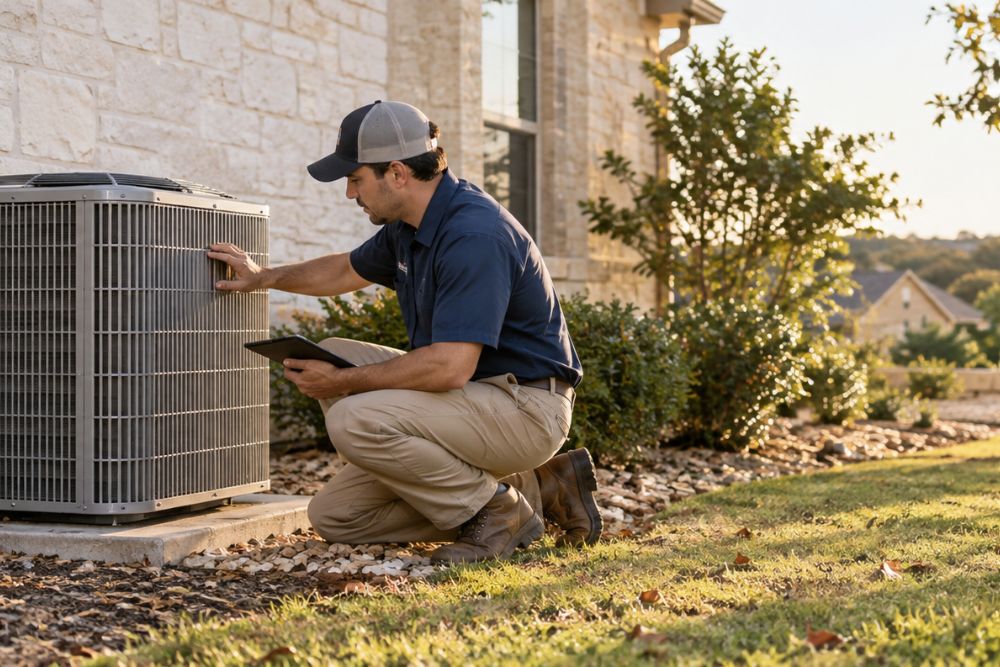
Remove loose leaves and debris around the condenser, and trim back plants that restrict airflow. A U.S. Department of Energy maintenance guide recommends about two feet of clearance around the unit. Leave coil cleaning, electrical work, and repairs to a qualified technician.
4. Look for drainage problems
Check for standing water or signs of a leak near the indoor unit. A clogged condensate drain can lead to water damage and affect indoor humidity, according to ENERGY STAR’s maintenance checklist. If you see water where it should not be, schedule service rather than waiting for the next routine visit.
5. Test the thermostat and note unusual cycling
Confirm that the thermostat responds when you change the setting and that the system starts and stops as expected. If the temperature shown seems inaccurate, the AC cycles unexpectedly, or the house never reaches the set temperature, mention it during your inspection.
6. Ask what the professional check-up will cover
A professional HVAC tune-up may include checking electrical connections and controls, inspecting the condensate drain, cleaning coils, assessing airflow, and checking refrigerant performance. These are among the items on ENERGY STAR’s contractor checklist. Ask your technician which checks apply to your equipment and whether any findings call for A/C repair.
7. Plan for heating season
Fall is also a sensible time to arrange a heating check-up. ENERGY STAR recommends a cooling check-up before summer and a heating check-up before winter. If you use a furnace or heat pump, ask about heating services when booking your visit.
Air Texas offers maintenance and repair services for San Antonio area homeowners. You can also read more about the company’s approach to biannual inspections.
Ready to review your system after a long cooling season? Schedule maintenance with Air Texas or call (210) 602-7181 to discuss an appointment before heating season.
Frequently asked questions
Why schedule an AC inspection after summer?
Heavy use can bring airflow, drainage, or cooling problems to your attention. An inspection gives a technician a chance to assess those symptoms and recommend any needed maintenance or repair.
What should I tell the technician?
Share any new noises, uneven temperatures, weak airflow, water near the indoor unit, thermostat problems, breaker trips, or changes in cooling performance. Note when the issue began and whether it happens consistently.
Is fall a good time for HVAC maintenance in San Antonio?
Yes. Fall is a practical time to discuss how your AC performed over summer and prepare your heating equipment for cooler weather. A fall visit does not replace the recommended pre-summer cooling check-up.