
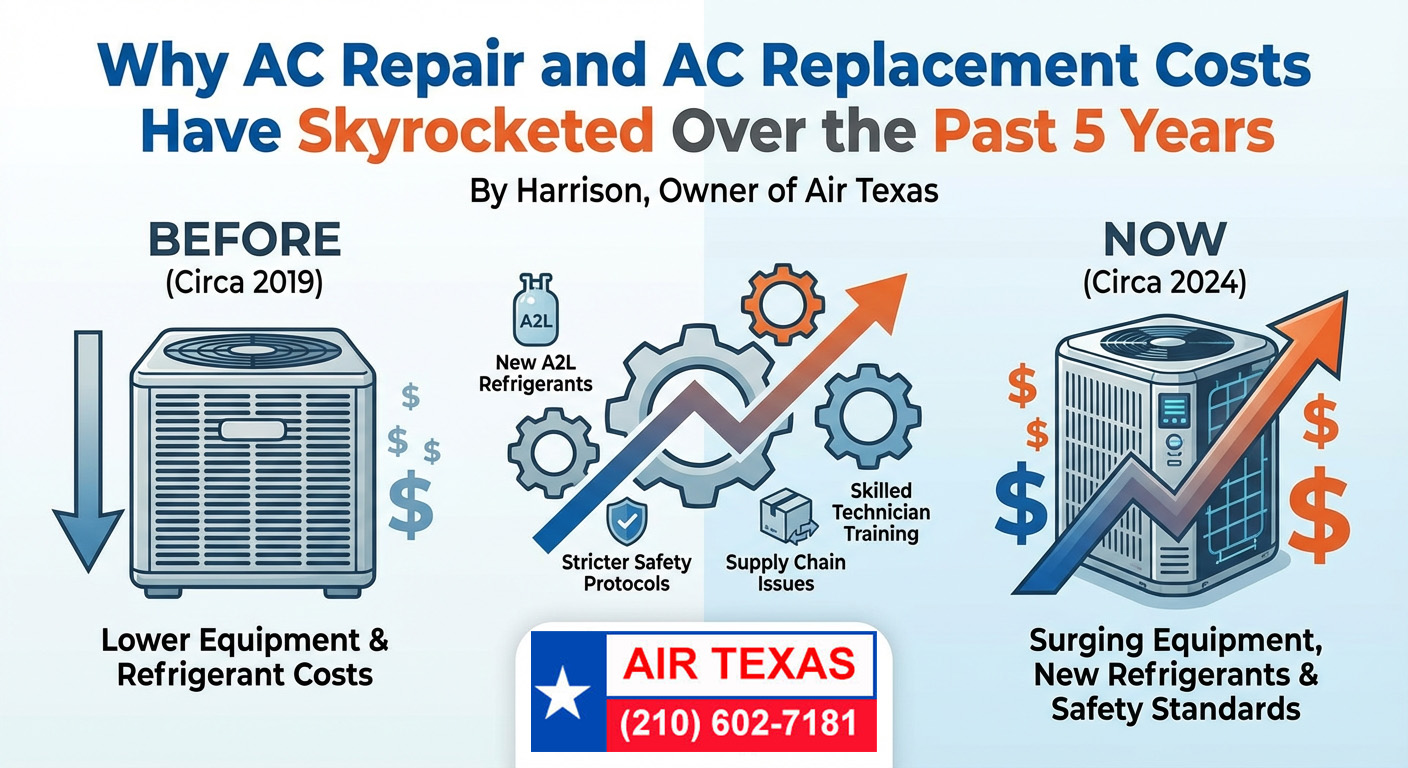
Why AC Repair and AC Replacement Costs Have Skyrocketed Over the Past 5 Years
By Harrison, Owner of Air Texas
If you’ve recently searched for AC repair or AC replacement, you’ve likely noticed prices have risen sharply.
At Air Texas, we hear the same question every day:
“Why does air conditioning work cost so much more than it used to?”
After thousands of air conditioning repairs and system replacements across Texas, I can confidently say the industry has fundamentally changed. One of the biggest shifts—rarely explained clearly—is the move to new refrigerants that are mildly flammable, along with stricter safety, training, and installation standards.
Here’s what homeowners deserve to know.
1. AC Replacement Costs Have Increased as Equipment Prices Surge
The biggest driver behind rising AC replacement costs is the cost of equipment itself.
What We’ve Experienced
- Manufacturer price increases of 30–60% since 2019
- Multiple price hikes per year
- Increased costs for copper, aluminum, and electronic components
Air Texas Case Study
In 2019, we replaced a 3-ton AC system for a homeowner.
In 2024, we replaced the same size system for their neighbor.
Same capacity. Same brand tier. Same labor.
The equipment alone was 42% more expensive.
Those increases directly affect replacement pricing today.
2. AC Repair Costs Are Rising Due to Refrigerant Changes — and Safety Requirements
One of the biggest reasons AC repair costs have increased is the industry-wide refrigerant transition.
What Changed
- Phase-down of older refrigerants
- Rising costs for R-410A
- Introduction of A2L refrigerants, which are mildly flammable
These new refrigerants are safe when handled and installed correctly, but they demand higher training standards, new tools, and stricter procedures.
3. Flammable Refrigerants Changed How AC Systems Are Installed and Repaired
This is one of the most important changes homeowners should understand.
Modern AC systems now use refrigerants that:
- Have lower environmental impact
- Are classified as mildly flammable
- Require specific safety protocols during installation and repair
What This Means for Homeowners
- More safety components built into systems
- Tighter installation tolerances
- Zero room for shortcuts
How Air Texas Protects Our Customers
At Air Texas, we emphasize:
- Advanced refrigerant safety training for all technicians
- Proper leak detection and pressure testing
- Manufacturer-approved installation practices
- Strict adherence to current safety codes
We don’t experiment in customers’ homes—we train before we install.
4. AC Repair vs AC Replacement in the New Refrigerant Era
We frequently evaluate whether AC repair or AC replacement makes more sense.
Real-World Case Study
A homeowner called us for a routine AC repair after their system stopped cooling.
The system was mechanically sound but had a refrigerant leak.
Five years ago, a repair would have been reasonable.
Today, considering:
- Refrigerant cost
- Safety standards
- Long-term reliability
AC replacement was the safer, more responsible recommendation.
This isn’t about selling equipment—it’s about delivering reliable, safe comfort.
5. Temporary Cooling Solutions When Replacement Equipment Is Delayed
Supply chain disruptions have changed how quickly systems can be replaced—especially during peak summer demand.
What Makes Air Texas Different
When AC replacement equipment is not immediately available, Air Texas provides temporary cooling solutions to protect our customers’ comfort and safety.
We deploy portable air conditioners to:
- Keep homes livable during extreme Texas heat
- Support families with children, elderly residents, or medical needs
- Reduce stress while waiting for proper replacement equipment
Why This Matters
In Texas, going days without air conditioning isn’t just uncomfortable—it can be dangerous.
Even when delays are outside our control, we don’t leave customers without options.
6. Skilled AC Repair and Replacement Technicians Matter More Than Ever
Modern AC systems—and flammable refrigerants—have raised the bar for technician skill.
At Air Texas, we invest heavily in:
- Ongoing manufacturer training
- Refrigerant safety certifications
- Updated diagnostic and recovery tools
- Code and inspection compliance
Poor training leads to:
- Safety risks
- Repeat AC repairs
- Shortened system life
- Higher long-term costs
Proper training protects your home and your investment.
7. Codes and Efficiency Standards Increase AC Replacement Costs
Today’s AC systems must meet:
- Higher SEER efficiency requirements
- Updated electrical and safety codes
- New refrigerant compliance standards
This results in:
- Longer installation times
- Additional materials
- More inspections
The benefit?
Lower energy bills, improved safety, and better long-term performance.
Why Air Texas Takes a Safety-First, Customer-First Approach
Despite rising costs, our philosophy hasn’t changed:
- Honest AC repair evaluations
- Replacement only when necessary
- No shortcuts—especially with flammable refrigerants
- Temporary cooling support when delays occur
We believe the best system is one that’s installed safely, correctly, and supported every step of the way.
The Bottom Line on AC Repair and AC Replacement Costs
Air conditioning costs didn’t rise because contractors got greedy.
They rose because:
- Equipment costs increased
- Refrigerants changed
- Safety standards expanded
- Skilled labor became more critical
- Supply chains became unpredictable
If you’re dealing with frequent AC repairs or considering AC replacement, understanding these changes matters.
At Air Texas, we’re here to explain your options and make sure your home stays safe, cool, and comfortable—even when challenges arise.
— Harrison
Owner, Air Texas

AC Repair & AC Replacement Cost FAQs
Why have AC repair and replacement costs increased?
Costs rose due to higher equipment prices, refrigerant changes, stricter safety codes, and increased technician training requirements.
Why is AC equipment so much more expensive now?
Manufacturers raised prices 30–60% since 2019 due to higher material, electronics, and compliance costs.
Why does refrigerant impact AC repair pricing?
Older refrigerants are being phased out, and new A2L refrigerants require specialized tools, safety procedures, and training.
Are A2L refrigerants safe?
Yes. They are mildly flammable but safe when installed and serviced correctly by trained professionals.
Should I repair or replace my AC?
It depends on system age, repair cost, refrigerant type, and long-term reliability. Systems with leaks often make replacement the safer choice.
Why do AC replacements sometimes take longer?
High demand and supply chain delays—especially during Texas summers—can slow equipment availability.
What if my AC replacement is delayed?
Temporary cooling solutions, like portable AC units, can keep homes safe and livable during extreme heat.
Do newer AC systems save money long term?
Yes. Higher efficiency standards reduce energy bills and improve safety and system lifespan.
Why does technician training matter?
Modern systems and refrigerants require advanced training to ensure safety, reliability, and long-term performance.
Are contractors raising prices unfairly?
No. Rising costs come from equipment inflation, refrigerant changes, safety rules, and labor—not contractor greed.